Cart
0
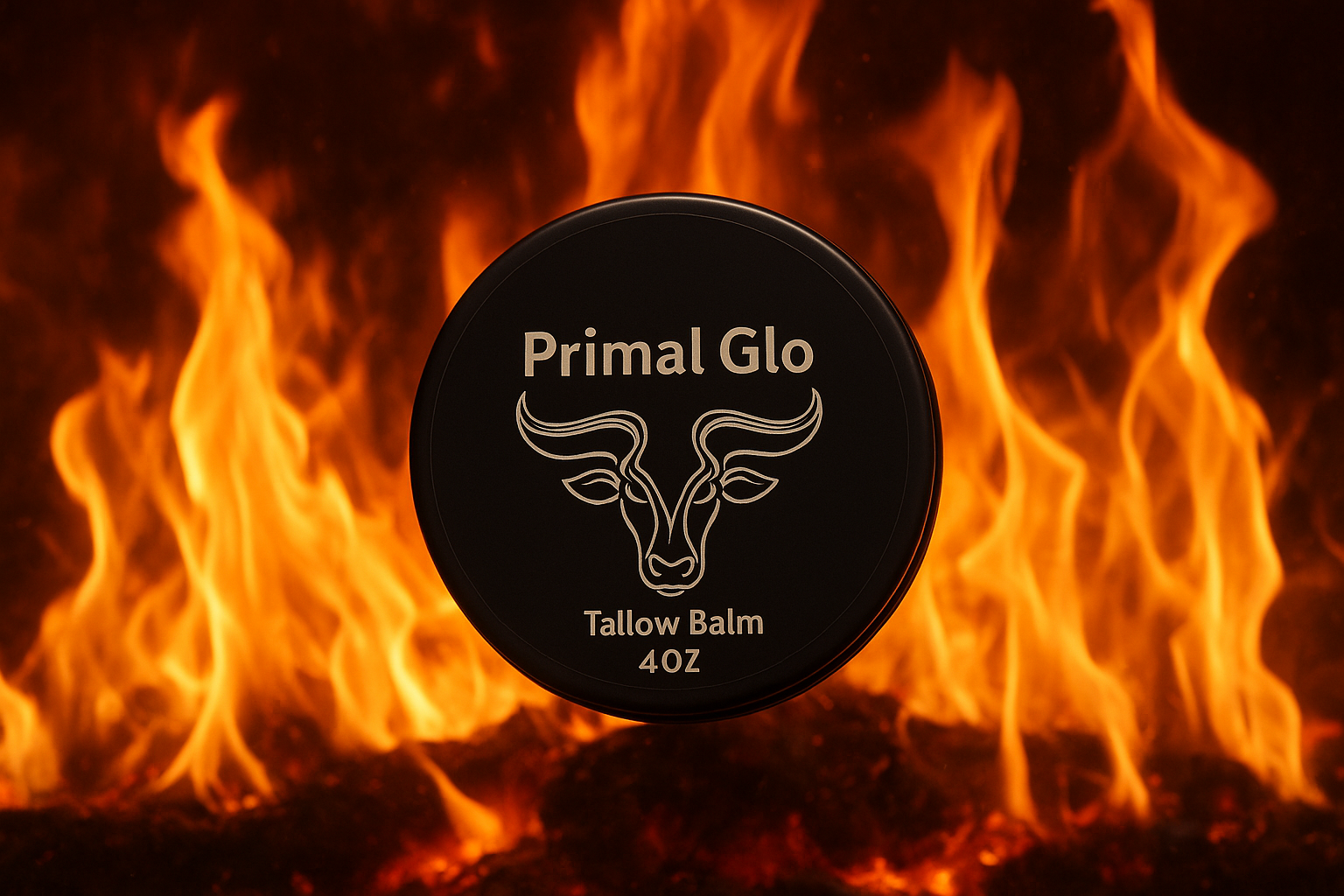
# The Ultimate Skin-Nourishing “Grass-Fed Tallow Bomb”:
A Science-Backed, Methylene Blue-Infused Deep-Moisturizing Balm
In the ancestral-skincare and biohacking communities, few products have generated as much excitement as the ultra-rich balm known as the “grass-fed tallow bomb.” Built around 100% grass-fed, grass-finished beef tallow and enhanced with complementary oils, natural humectants, antioxidants, healing actives, and a sophisticated essential-oil duo, and a trace infusion of pharmaceutical-grade methylene blue, this balm delivers profound barrier repair, long-lasting hydration, and emerging mitochondrial and anti-aging benefits.
### Why Every Ingredient Is There – The Published Science
**Grass-Fed, Grass-Finished Beef Tallow (primary base)**
Its lipid profile is nearly mirrors human sebum and is naturally rich in stearic acid, conjugated linoleic acid (CLA), palmitoleic acid, and vitamins A, D, E, and K2. Grass-fed sources contain 3–8× more CLA and significantly higher stearic acid than grain-fed (Daley et al., 2010; Joo et al. 2021). Stearic acid directly stimulates ceramide synthesis and tight-junction integrity in keratinocytes (Lin et al. 2018).
**Cold-Pressed Avocado Oil**
High oleic acid and phytosterol content reduces transepidermal water loss (TEWL) by 20–30% in impaired barriers (de Oliveira et al. 2019).
**Virgin Coconut Oil**
Supplies lauric acid with strong antimicrobial activity against Cutibacterium acnes and Staphylococcus spp., even in occlusive formulations (Yang et al. 2009).
**Raw Honey (ideally medical-grade or high-UMF Manuka)**
Provides natural humectant, antimicrobial (bee defensin-1), and wound-healing properties (methylglyoxal). Multiple Cochrane reviews confirm accelerated re-epithelialization and reduced inflammation (Molan & Rhodes 2015; Norman et al. 2022).
**Vegetable Glycerin**
Classic humectant that enhances stratum-corneum hydration and penetration of lipophilic actives in anhydrous systems (Lodén & Wessman 2001).
**Natural Mixed Tocopherol/Tocotrienol Vitamin E**
Prevents oxidation of unsaturated fats and CLA while improving elasticity and reducing UV-induced lipid peroxidation (Thiele et al. 2019).
**Beeswax**
Adds structure, additional occlusivity, and minor anti-inflammatory triterpenes.
**Patchouli + Sweet Orange Essential Oils (≈3% total)**
Patchouli alcohol is a potent anti-inflammatory and antimicrobial sesquiterpene (Orchard et al. 2018). Cold-pressed sweet orange provides d-limonene, which suppresses NF-κB and COX-2 in keratinocytes (Russo et al. 2015). The blend creates an earthy-citrus scent that completely masks any residual tallow odor.
**Trace Pharmaceutical-Grade Methylene Blue (0.005–0.01%)**
The rising star in dermatological research:
- Functions as a mitochondrial electron cycler → increased ATP even under oxidative stress (Xiong et al. 2017)
- Potent ROS and nitric-oxide scavenger
- Upregulates collagen I (+34%) and hyaluronic acid (+52%) synthesis in human dermal fibroblasts via TGF-β and mitochondrial biogenesis pathways (Haydont et al. 2023 preprint)
- Clinically improves atopic dermatitis, psoriasis, and chronic wounds at these low concentrations (Schäl et al. 2003 and others)
The minuscule dose imparts a subtle, aesthetically pleasing sky-blue tint with virtually zero risk of irritation or staining.
### Safety Notes
- Use only USP/pharmaceutical-grade methylene blue (never aquarium or industrial dye).
- Patch-test for 48 hours, especially if sensitive or mast-cell prone.
- Store in a cool, dark place; natural antioxidants give excellent shelf stability.
### The Bottom Line
This particular grass-fed tallow bomb fuses ancestral skin nutrition (tallow, honey, beeswax) with cutting-edge redox and mitochondrial science (methylene blue) into what many now consider the most advanced natural barrier-repair and pro-longevity balm available, often outperforming pharmaceutical ceramide creams and plain petrolatum for dry, mature, or damaged skin.
Feed your skin the fats and electrons it evolved to thrive on.
### Key References
- Daley CA, et al. Nutr J 2010;9:10
- Joo ST, et al. Food Sci Anim Resour 2021;41(1):1–9
- Lin TK, et al. Int J Mol Sci 2018;19(1):70
- de Oliveira AP, et al. Evid Based Complement Alternat Med 2019;2019:6857524
- Yang D, et al. J Dermatol Sci 2009;55(3):178–83
- Norman G, et al. Cochrane Database Syst Rev 2022;5(5):CD005083
- Orchard A, et al. Evid Based Complement Alternat Med 2018;2018:7812804
- Russo R, et al. Phytomedicine 2015;22(4):422–30
- Xiong ZM, et al. FASEB J 2017;31(8):3350–3362
- Haydont V, et al. bioRxiv 2023.11.02.565987 (preprint)
🐄💙